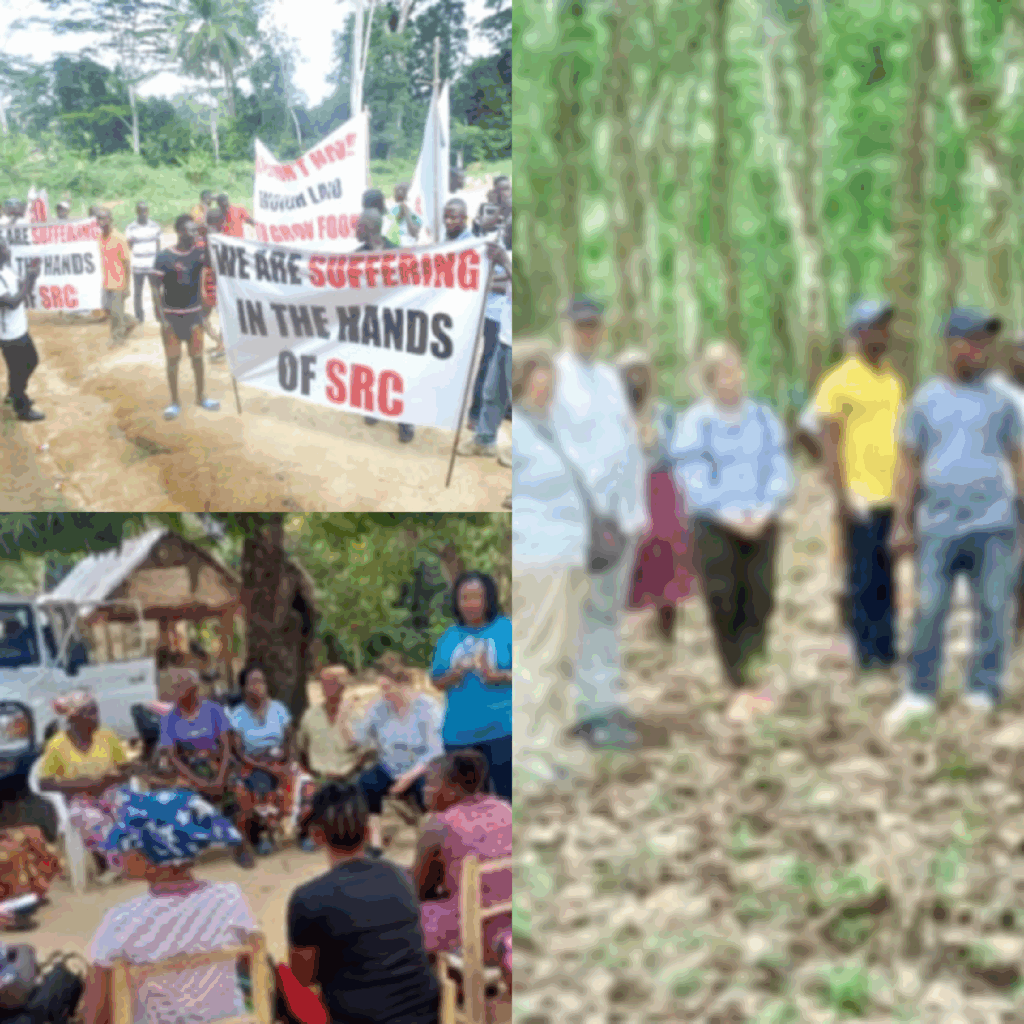
Liberia – Nearly six years after 22 Liberian communities filed a formal complaint with the World Bank’s Compliance Advisor Ombudsman (CAO), the International Finance Corporation (IFC) faces mounting criticism for failing to accept responsibility for widespread human rights abuses and environmental destruction tied to its investment in the Salala Rubber Corporation (SRC).
In March 2025, the CAO released a scathing report confirming what local communities have long alleged: that the IFC failed to apply its own safeguards while financing SRC’s expansion, an operation that led to land seizures, polluted water sources, and systemic abuse, including sexual exploitation of women by SRC contractors.
Rather than take corrective action, the IFC responded with what civil society groups are calling a “weak and shameful” action plan. While the plan includes a livelihoods fund, critics say it relies too heavily on voluntary commitments from SRC’s former owner, Socfin, and new buyer, Jeety leaving victims without adequate redress.
“Now, the IFC is playing Pontius Pilate, washing its hands and asserting that it is powerless to act simply because the loan was repaid,” said Alfred Lahai Gabbai Brownell Sr., legal counsel for the complainant communities and 2019 Goldman Environmental Prize winner. “This is not accountability it’s abandonment.”
The complaint filed in 2019 details severe and sustained harm: crops destroyed without compensation, ancestral lands seized, and toxic chemicals contaminating waterways. Women also endured sexual violence, allegedly in exchange for jobs or wages acts described as “systemic and exploitative.”
Though the CAO validated most of the allegations and urged the IFC to commit to “real remediation,” the institution’s management has fallen short. Among the most glaring issues raised:
Failure to address land rights violations: IFC has refused to investigate whether the government illegally gave away ancestral land.
Dismissal of Indigenous identity: Despite expert testimonies and CAO recommendations, the IFC questioned the Kpelle people's Indigenous status without field-based analysis.
A diluted compensation scheme: The proposed livelihoods fund is to be distributed among all neighboring communities, not solely the complainants—weakening the impact of reparations.
Avoidance of responsibility: IFC insists it no longer has leverage since the loan has been repaid and SRC was sold, despite CAO findings that legal remedies remain possible.
Delays in relief: Citing “security concerns,” IFC postponed implementation of its plan indefinitely.
Local leaders and survivors are voicing their outrage.
“We depend on our land and forest for everything,” said Ma. Mattia Gbar, Chairlady of Martin Village. “Since SRC took our land, everything has been hard. Let them pay for what they did.”
Another survivor, whose name is withheld for protection, shared:
“I and other women were asked for sex just to keep our jobs. This is not just unfair, it’s violence. IFC says it wants to fix the harm, but what about the women who suffered?”
While communities welcome the CAO’s strong findings, they reject IFC’s attempt to distance itself from the harm. Advocacy groups say it’s now time for the IFC to step up, enforce accountability measures, and ensure justice for the affected people.
“The burden of justice should not rest on the goodwill of private plantation owners,” Brownell added. “It’s time for the IFC to act like a development institution—not a bystander.”
About the Author