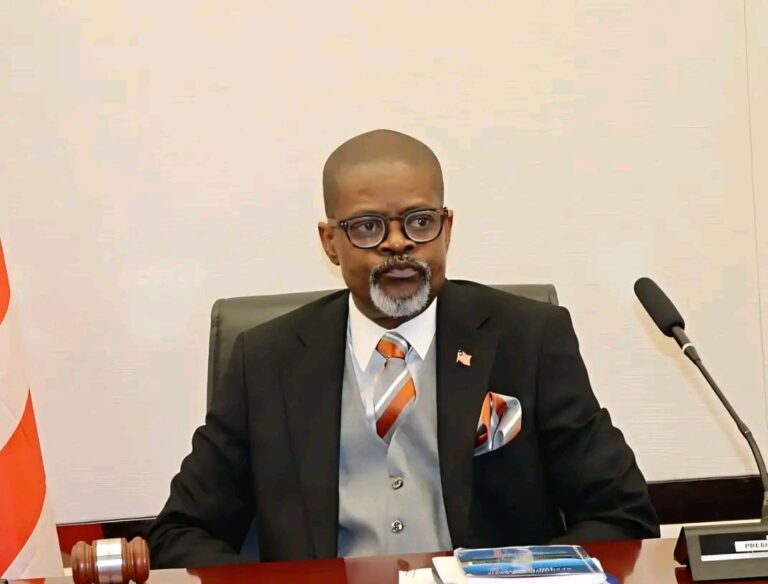
MONROVIA, Liberia — The arrival of the first batch of newly procured road construction equipment, commonly referred to as “yellow machines,” has sparked widespread commendation across Liberia, with the Centrism Movement describing the development as a major boost to the country’s infrastructure drive.
Executive Chairperson of the movement, Kanio Bai Gbala, has praised the initiative, calling it a “significant step forward in accelerating Liberia’s road development and broader economic transformation.”
According to reports from several local media outlets, the heavy-duty equipment — including excavators, graders, loaders and bulldozers — was procured by the Government of Liberia to strengthen the nation’s road network and improve access to key economic corridors.
The procurement is part of the infrastructure agenda being advanced under the leadership of President Joseph Nyuma Boakai, whose administration has emphasized road connectivity as a key pillar of national development.
Speaking on the development, Cllr. Gbala, a native of Grand Gedeh County, expressed personal satisfaction with the arrival of the equipment, noting that counties in southeastern Liberia have historically struggled with poor road conditions and limited connectivity.
“For decades, Grand Gedeh has suffered from isolation, particularly during the rainy season when many roads become nearly impassable,” Gbala said. “The arrival of these machines is deeply meaningful not only nationally but also personally, because my own county is finally beginning to experience tangible improvements under President Boakai’s leadership.”
Infrastructure experts and regional authorities believe the deployment of the machinery could significantly improve access to rural communities and agricultural hubs.
Media reports indicate that several counties — including Grand Gedeh County, Sinoe County, Maryland County, Lofa County and Gbarpolu County — are expected to benefit significantly as the machines are deployed based on priority infrastructure needs.
In Grand Gedeh specifically, several feeder roads and market access routes have already undergone repair in recent months. Gbala described these developments as clear evidence of what he called a “renewed seriousness” by the government to address Liberia’s longstanding rural infrastructure deficit.
He, however, stressed that the impact of the machines will depend heavily on how effectively they are managed and maintained.
“The deployment of these machines must be supported by strong maintenance systems, transparent allocation schedules and active community oversight,” Gbala noted. “Without accountability and proper management, the long-term benefits could be undermined.”
He further emphasized that improved road infrastructure will play a critical role in boosting agriculture, trade and access to basic services in rural counties.
“For counties like Grand Gedeh, where economic activity and access to healthcare, education and markets depend largely on road connectivity, these machines represent more than equipment,” he said. “They are instruments of hope.”
The Centrism Movement has therefore called on Liberians to support the government’s infrastructure agenda while also demanding transparency and accountability to ensure the machinery is used strictly in the interest of the public.
About the Author