By: Melvin Flomo
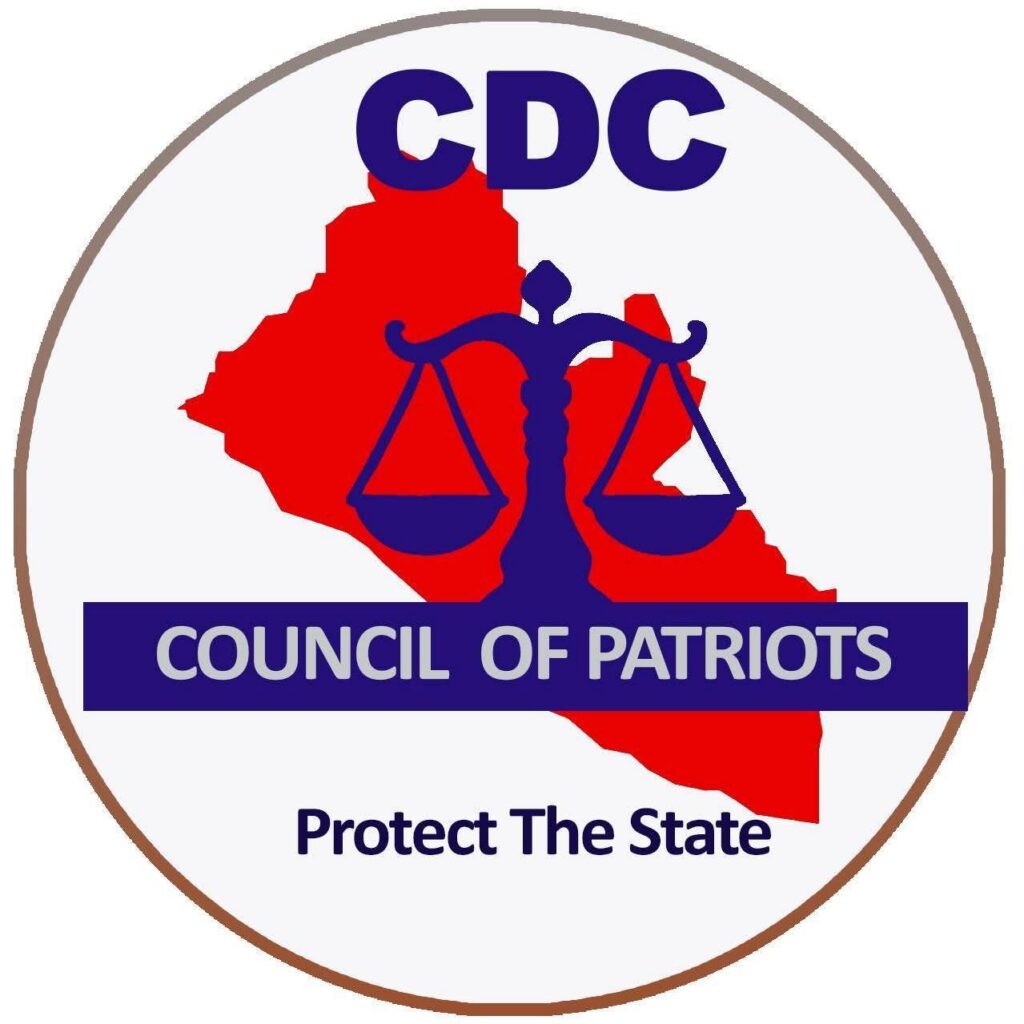
MONROVIA — Liberia’s opposition-aligned political advocacy movement, the CDC-Council of Patriots (CDC-COP), has formally petitioned the United Nations, urging the international body to intervene in what the group describes as an escalating democratic and human rights crisis under the administration of President Joseph Boakai and Vice President Jeremiah Koung.
In a communication dated May 11, 2026, and addressed to United Nations Secretary-General António Guterres through UN Resident Coordinator Christine N. Umutoni, the movement accused the Liberian government of alleged democratic backsliding, political intimidation, constitutional violations, and widespread insecurity.
The petition, approved by the National Executive Council of CDC-COP, called on the United Nations and its affiliated human rights institutions to launch an international review of Liberia’s current governance and human rights situation.
At the center of the petition are accusations that the Boakai-Koung administration is allegedly suppressing opposition voices, weakening democratic institutions, and using state security apparatuses to intimidate critics and peaceful demonstrators.
According to the movement, domestic democratic channels meant to address public grievances have allegedly become ineffective due to political interference and institutional compromise.
“The Liberian people deserve protection, justice, accountability, and renewed confidence in democratic governance,” the petition stated. “The United Nations must intervene before the situation deteriorates further.”
Legislature, Judiciary Under Criticism
CDC-COP alleged that Liberia’s Legislature, constitutionally mandated to provide oversight over the Executive Branch, has become politically aligned with the ruling establishment, thereby undermining checks and balances.
The movement further claimed that opposition lawmakers and dissenting political voices have increasingly faced intimidation and marginalization within the country’s political environment.
The petition also directed criticism toward Liberia’s Judiciary, accusing judicial authorities of repeatedly failing to uphold constitutional principles and safeguard the rule of law.
According to the communication, many Liberians now fear that the country’s democratic institutions are becoming vulnerable to executive influence, threatening the constitutional doctrine of separation of powers.
CDC-COP additionally referenced controversial remarks allegedly made by Unity Party Chairman Luther Tarpeh, who reportedly stated that the ruling establishment intended to remain in power for “200 years by any means necessary.” The movement argued that such rhetoric undermines democratic pluralism and constitutional governance.
Allegations of Police Brutality
A major portion of the petition focused on allegations of police brutality and politically motivated repression by state security forces.
The movement alleged that CDC-COP National Chairman Foday N. Massaquoi and several student leaders associated with the Vanguard Student Unification Party were unlawfully arrested, detained, tortured, and stripped naked following peaceful protests held on April 14, 2026.
CDC-COP maintained that the demonstrations were constitutionally protected under Article 17 of Liberia’s 1986 Constitution, which guarantees the rights to peaceful assembly and free expression.
The organization accused security personnel of repeatedly targeting opposition activists, youth campaigners, and protesters advocating for jobs, justice, and accountability.
The petition specifically called on the United Nations Human Rights Council to investigate allegations involving Liberia’s Inspector General of Police, Gregory Coleman, and urged consideration of targeted international sanctions against individuals accused of undermining democracy and violating human rights.
Kinjor Incident Revisited
CDC-COP also revisited the controversial Kinjor incident, which it described as a “massacre,” alleging that state security forces used lethal force against demonstrators demanding fair land and mining benefits in the affected community.
The movement argued that the government’s internal investigation into the incident justified the killings while compensation promised to affected families reportedly remains unresolved.
Beyond the Kinjor matter, the petition cited growing public concerns over corruption, selective justice, unemployment, economic hardship, drug abuse, unexplained deaths in police custody, and what it termed a broader decline in public trust in Liberia’s security institutions.
The communication referenced the deaths of several Liberians, including James Pandy, Little Favor, and Sgt. Bobby Manneh, claiming that the incidents have intensified public skepticism regarding accountability within the security sector.
Serious Security Allegation Raised
In one of the petition’s most serious allegations, CDC-COP claimed that sensitive national intelligence data had allegedly been transferred to a Lebanese company reportedly linked to Hezbollah through unlawful arrangements.
However, the petition did not publicly provide documentary evidence to substantiate the allegation.
The movement further urged the United Nations to reassess Liberia’s continued role on the UN Security Council, arguing that a country facing allegations of democratic suppression and human rights violations should not occupy what it described as a moral position of global democratic representation.
Government Yet to Respond
As of press time, the Government of Liberia had not officially responded to the allegations contained in the petition.
The communication now places additional international attention on Liberia’s political climate amid growing tensions between the government and opposition groups over governance, accountability, and the protection of civil liberties.
About the Author