By: Moses Gwee Jr
Monrovia, July 4, 2025 – The John F. Kennedy Medical Center (JFK) has officially launched construction of Liberia’s first dedicated Radiotherapy Center, marking a major step forward in the country’s battle against cancer. The facility, once completed, will provide critical cancer treatment services previously unavailable within the country.
The project is made possible through the support of the International Atomic Energy Agency (IAEA) under its “Rays of Hope” initiative, a global program aimed at expanding access to life-saving radiotherapy services, particularly in low- and middle-income countries. The new center will be the first of its kind in Liberia and will help close significant gaps in cancer care.
Health Minister Dr. Louise M. Kpoto hailed the initiative as a game-changer, stating the center aligns with the government’s national health strategy. She highlighted that more than 70% of cancer cases in Liberia—such as cervical, breast, liver, and prostate—require treatments currently sought abroad, making the facility both timely and essential. “This center is not just about equipment—it’s about hope, training, and local empowerment,” Dr. Kpoto said.
Dr. Linda A. Birch, Chief Executive Officer of JFK, emphasized the center's potential impact on patient outcomes. She expressed deep gratitude to the IAEA and the Government of Liberia for investing in a solution that will serve thousands of Liberians annually. “We are entering a new era of cancer care in Liberia, one that will save lives and build local capacity for generations,” she added.
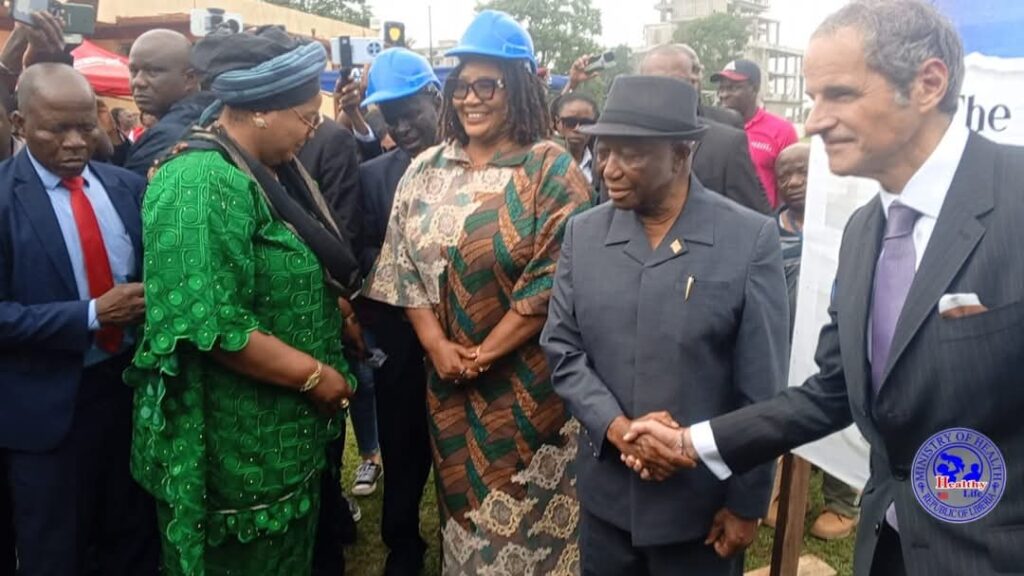
At the groundbreaking ceremony, President Joseph Nyuma Boakai led the symbolic turning of the soil alongside IAEA Director General Rafael Mariano Grossi. The President described the project as a beacon of hope and a fulfillment of his administration’s commitment to prioritize healthcare. “This is not merely a structure we are starting—it is a legacy of life and dignity,” President Boakai remarked.
Once completed, the JFK Radiotherapy Center will offer not only treatment but also serve as a national hub for research, professional training, and the advancement of specialized healthcare. The government anticipates that the center will dramatically reduce cancer-related deaths and ease the financial burden on patients who previously had to travel abroad for care.
About the Author