By: Melvin Flomo
WhatsApp: 0778677647
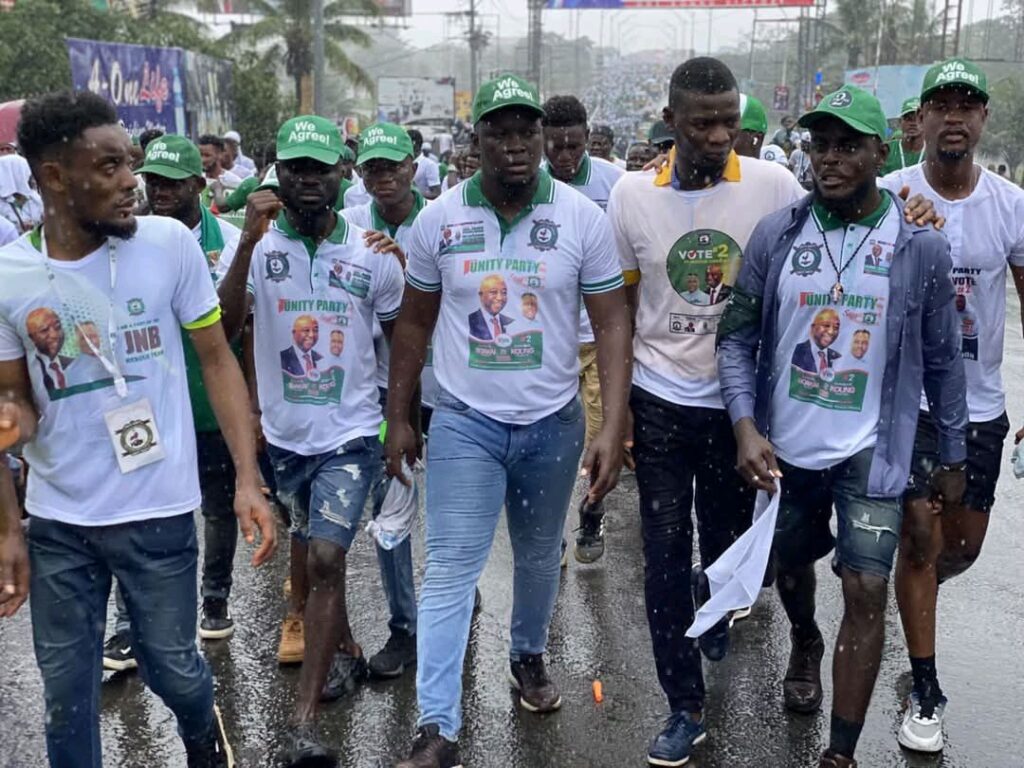
Monrovia – In a passionate reflection on the state of youth engagement within the ruling Unity Party, one of its outspoken young partisans, Lasana S. Kanneh, has voiced strong disappointment over what he describes as the party’s betrayal of its youthful base, those who fought tirelessly to secure the presidency for Joseph N. Boakai.
Kanneh, who served on the frontlines of the 2023 political campaign, laments that the Unity Party, once a beacon of unity and inclusion, has lost its identity and failed to live up to its ideals, especially in relation to its most active and loyal members: the youth.
“We, the young foot soldiers, stood firm in the face of daunting odds. We marched through the weight of historical conditions, unafraid to challenge the status quo,” Kanneh wrote in a strongly worded piece. “Our resolve was unshakeable, our purpose clear: to honor the call of history and forge a brighter future for our nation.”
According to Kanneh, while the youth of the party endured threats, insults, and even violence under the previous regime, they did so with unwavering commitment not for personal gain, but to usher in a government that would uphold justice, inclusion, and development.
But now, he argues, those sacrifices have been forgotten.
“The same party that once rallied against marginalization now perpetuates it,” Kanneh wrote. “We are treated as outcasts, relegated to the margins of the society we fought to transform. Calls go unanswered, messages ignored, and promises unfulfilled.”
Kanneh also criticized the party’s leadership for favoring individuals who previously opposed President Boakai’s rise to power, while sidelining the youth who defended the party’s vision at great personal cost.
“It is galling to witness those we trusted, leaders who should uphold our dignity extend greater favor to individuals who once sought to dismantle our movement,” he added.
While acknowledging that they never expected political reward, Kanneh emphasized that the youth deserve recognition, empowerment, and opportunities not as charity, but as an obligation.
“Our restraint should not be mistaken for weakness, nor our silence for complicity,” he warned. “The Unity Party must heed this call before its actions sow the seeds of an imbroglio that could fracture the very foundation it stands upon.”
In a call to action, Kanneh urged the leadership of the Unity Party to remember those who carried its banner during its most difficult moments.
“Empower us, employ us, and honor us not as a favor, but as a duty,” he concluded. “For if you fail to do so, history will judge you harshly, and we, the youth, will chart our own path, as we did yesteryear with courage, conviction, and an unwavering commitment to Liberia’s promise.”
As Liberia’s new administration finds its footing, Kanneh’s message echoes the mounting frustration among Unity Party youth who feel abandoned after playing a key role in the party’s electoral success. Their growing dissatisfaction brings to light deeper questions about youth inclusion and political accountability in Liberia’s unfolding democratic journey.
About the Author