By: Melvin Flomo
WhatsApp: 0778677647
The Chair of the Liberian Senate Committee on Health, Senator Dabah M. Varpilah, has sharply criticized the dilapidated infrastructure of the Liberia Medicines and Health Regulatory Authority (LMHRA), branding it “embarrassing” and unworthy of the nation’s 176-year legacy.
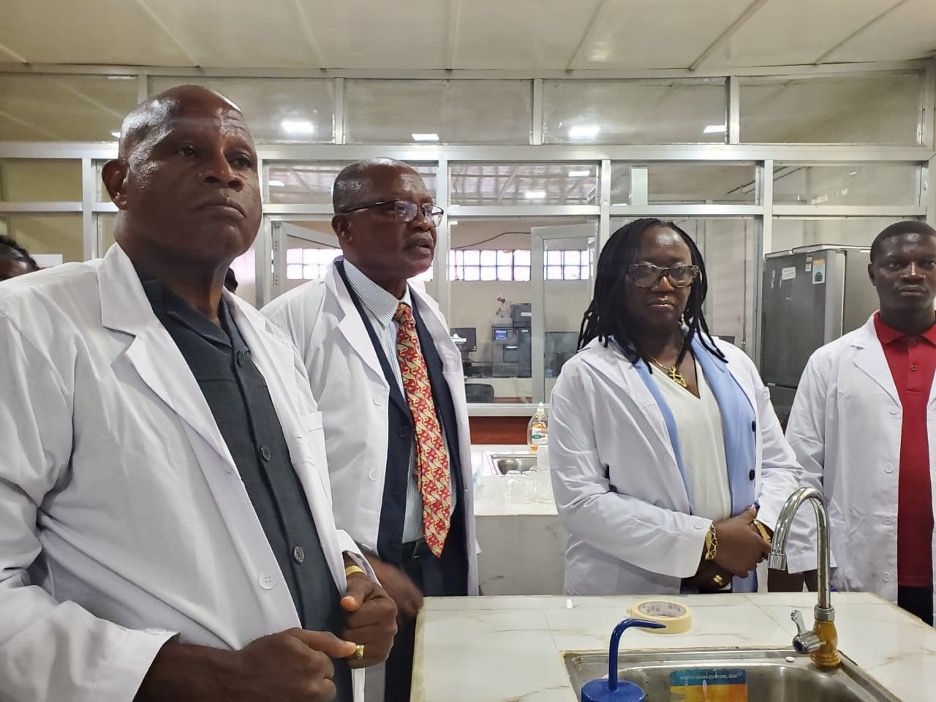
Speaking during an oversight visit Friday to LMHRA’s headquarters in Monrovia and its quality control laboratory in Careysburg, Madam Varpilah, accompanied by committee members and senior agency officials, said the conditions at the country’s top health regulatory agency do not reflect national dignity.
“We are not glad about what we saw here because it doesn’t represent Liberia,” she said, referencing President Joseph Boakai’s call for infrastructure that reflects national pride. “It is embarrassing, let me be very honest. When you travel to neighboring countries, you see their systems… and you feel a little bit sad about your country.”
Despite her disappointment, the Grand Cape Mount County Senator promised that the Senate Health Committee would advocate for LMHRA’s inclusion in the national budget to address pressing infrastructural and operational challenges.
“We would ask you questions and look at how we can advocate to address the challenges confronting the institution,” she said. “But no advocacy is successful without defining what is being advocated for.”
The oversight mission, she explained, was intended to gather firsthand information to make a compelling case before the Senate plenary for improvements to the country's drug regulation infrastructure.
Hon. Varpilah stressed the importance of long-term planning, saying reform should be incremental but consistent.
“Every year, if we say we will achieve this, in a few years’ time, you will see something better that we will leave behind for others to inherit. That is our dream.”
While condemning the poor conditions, she praised LMHRA staff for their commitment under trying circumstances.
“I can only encourage you to continue to do your best. We will work with management… where we all sit down and discuss these challenges,” she said. “This could be done in one, two, three years… but if we start building upon what is available without shifting blame we will do better.”
Earlier in the visit, LMHRA Executive Director Dr. Luke L. Bawo acknowledged the agency’s longstanding challenges and revealed a phased plan to modernize the facility and its operations.
“We inherited an entity that was confronted by many challenges,” Bawo said. “Our mandate is to protect the health of the people by ensuring only safe, quality products are in circulation.”
He announced plans to automate the agency’s processes from drug registration to certification and to implement a digital track-and-trace system for health commodities.
“The current infrastructure does not meet international assessment standards,” Bawo admitted, but added that a public-private partnership had been approved by both the Concession Committee and the Public Procurement and Concessions Commission (PPCC) to revamp the laboratory.
“By the end of 2025, the LMHRA will have the capacity to test all products in circulation across the country,” he stated.
During the tour, the Senate committee observed that several key testing machines were out of service, with repair costs estimated at over $10,000. Additionally, the lab suffers from intermittent electricity, forcing some departments into prolonged inactivity.
Keep following Teeria Online Television
About the Author