By: Melvin Flomo
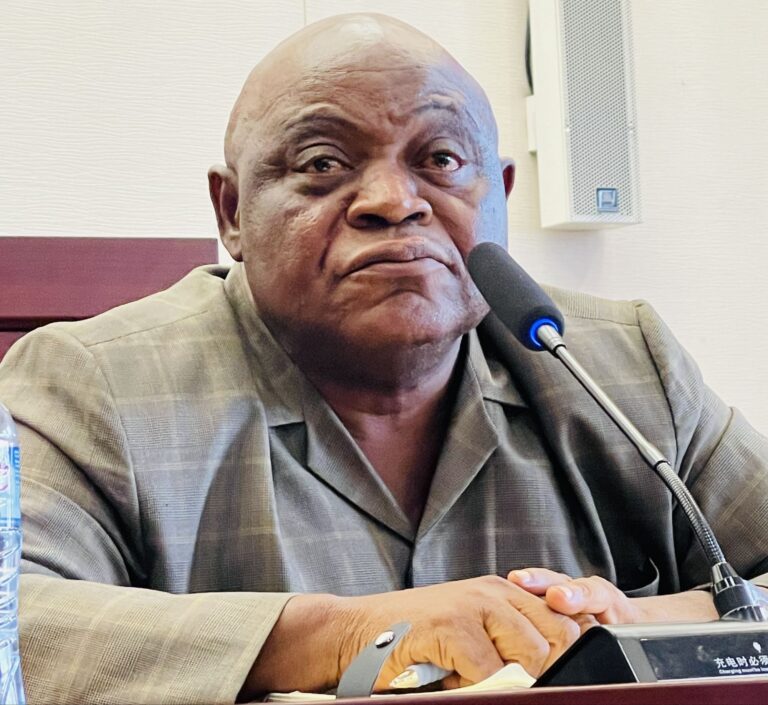
Monrovia, Liberia – Abraham Darius Dillon is calling on Liberians to rally behind his proposed Bill seeking the establishment of a Claims Court of Liberia, describing the initiative as a long-overdue step toward strengthening constitutional governance and accountability.
The Montserrado County Senator, who has formally introduced the draft legislation before the Liberian Senate, said the proposed court would provide a specialized judicial platform for citizens, organizations, and business entities to pursue legal claims against the government when their constitutional rights are violated.
Speaking on OK FM Conversation in Monrovia, Senator Dillon said the bill is grounded in Article 26 of the 1986 Constitution of Liberia, which guarantees individuals and associations the right to seek redress when their rights are infringed upon by the state or its agents.
According to Dillon, Article 26 explicitly provides that suits against the government shall originate in a Claims Court, with appeals proceeding directly to the Supreme Court of Liberia. However, he noted that despite this constitutional provision, Liberia has operated for decades without an operational Claims Court.
“This is a constitutional mandate that has remained unimplemented for over 40 years,” Dillon emphasized, describing the absence of the court as a significant institutional gap within the country’s judicial framework.
The senator urged citizens, Civil Society Organizations (CSOs), and Non-Governmental Organizations (NGOs) to support the proposed legislation, stressing that the Claims Court would serve as a vital mechanism to protect constitutional rights—particularly in matters involving property rights, contractual obligations, eminent domain, and alleged abuses by government officials.
He explained that while Liberia currently has criminal courts to prosecute offenses and civil courts to adjudicate disputes among private parties, there is no dedicated forum specifically mandated to hear constitutional claims brought by citizens against the state.
Dillon further highlighted concerns surrounding land disputes and governance challenges, including issues of multiple ownership claims and prolonged legal battles over property. He said stronger legal structures, including the proposed Claims Court, could help address systemic weaknesses and restore public confidence in the justice system.
“When citizens believe they cannot fairly challenge the government in court, it weakens democracy and the rule of law,” Dillon noted, stressing the importance of judicial independence and credibility.
The lawmaker also acknowledged that advocacy for the establishment of a Claims Court predates his tenure in the Senate, recalling years of public calls by concerned citizens for the full implementation of Article 26.
He clarified that the proposed court would complement—not replace—the existing judicial system. Appeals from the Claims Court would go directly to the Supreme Court, ensuring authoritative constitutional interpretation and expedited review of decisions.
Senator Dillon disclosed that the bill has already begun drawing attention within the Senate, with several lawmakers expressing interest. However, he maintained that public engagement will be key to advancing the legislation.
He called on stakeholders across Liberia to actively participate in discussions surrounding the bill, describing the proposed Claims Court as a critical step toward enhancing justice, accountability, and constitutional governance.
About the Author