By: Melvin Flomo / WhatsApp: 0778677647
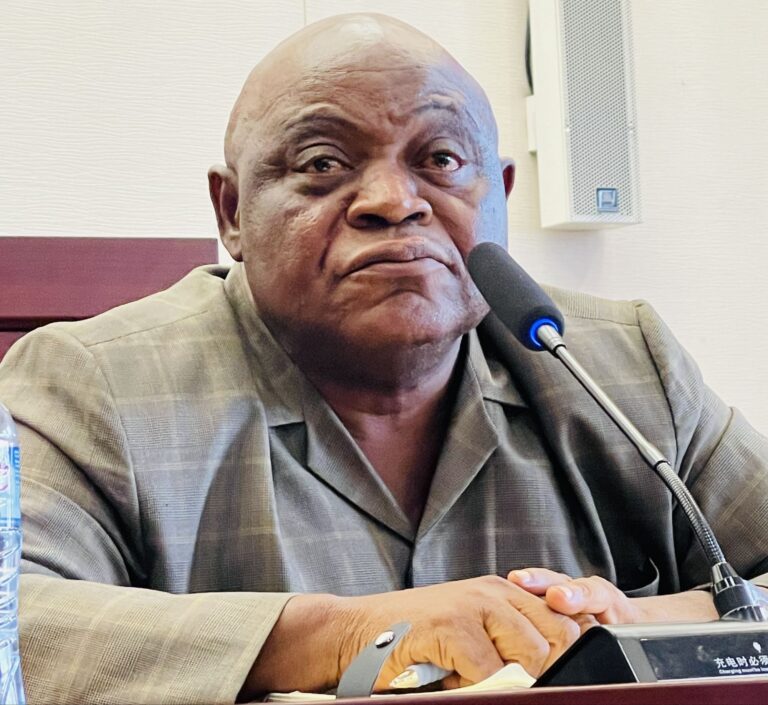
Montserrado County Senator Abraham Darius Dillon has urged the Liberian Senate to confront long-standing legal and procedural weaknesses that continue to delay justice and weaken public confidence in the country’s judicial system.
Addressing plenary on Thursday, Senator Dillon challenged the Senate—particularly the Committee on Judiciary, Human Rights, Claims and Petitions—to take urgent and deliberate steps toward reforming laws that, in his view, enable prolonged court delays, unchecked discretion, and weak enforcement.
Dillon warned that Liberia’s fight against corruption and impunity cannot succeed without a justice system that delivers timely and predictable outcomes. He noted that while the Executive has taken visible steps to advance the anti-corruption agenda, the Legislature must play its part by modernizing outdated laws and strengthening legal frameworks governing judicial processes.
“Justice delayed is justice denied,” the Montserrado Senator emphasized, adding that prolonged court proceedings continue to deny citizens their constitutional right to fair and speedy hearings.
A major concern raised by Dillon was the handling of writs of prohibition by the Supreme Court. He explained that such writs are designed to immediately stop illegal actions, but in practice, decisions on these matters often take months or even years. According to him, these delays allow alleged illegal acts to continue, defeating the very intent of the law and deepening public frustration with the justice system.
To underscore his argument, Dillon referenced a case involving the Assets Recovery and Property Retrieval Task Force (AREPT) and the seizure of vehicles belonging to Gracious Ride. The seizure was linked to findings that the vehicles were allegedly acquired using public funds. Although the court reportedly ordered that the property be returned to preserve the status quo pending investigation, the assets were later disposed of due to delays and weak enforcement.
Dillon described the situation as a clear breakdown of judicial enforcement and a serious violation of the rule of law.
He also raised concerns about the discretionary authority exercised by individual justices in chambers, particularly when decisions are declared final and not subject to appeal before the full bench of the Supreme Court. Such practices, he argued, restrict access to justice and undermine transparency and accountability within the judiciary.
Beyond the courts, Senator Dillon criticized weak enforcement of existing laws, especially drug control statutes. He reminded lawmakers that Liberia already has strong laws allowing for the confiscation of vehicles and other conveyances used in drug trafficking. However, he said inconsistent enforcement has rendered these laws ineffective, even in cases where evidence is clear.
According to Dillon, firm and impartial application of the law would significantly deter crime and reinforce the authority of the state. “When laws are applied without fear or favor, criminals think twice,” he said.
The Senator welcomed ongoing discussions around constitutional review, particularly proposals aimed at addressing election-related disputes and judicial timelines. He urged the Judiciary Committee to remain focused and proactive during the current session, stressing that legal reform is critical not only for domestic governance but also for Liberia’s international standing.
Dillon noted that as Liberia serves as a non-permanent member of the United Nations Security Council until 2027, the country must demonstrate a strong commitment to the rule of law and democratic accountability.
He concluded by reaffirming his commitment to pursuing meaningful legal reforms, warning that failure to act decisively will leave the justice system struggling and public trust in governance increasingly fragile.
About the Author