By: Melvin Flomo
WhatsApp: 0778677647
CAPITOL HILL, Monrovia — The Liberian government has submitted a proposed US$363.9 million public-private partnership agreement to the Senate for approval. The deal, if ratified, would authorize Pavifort AL Associates, a Sierra Leone–based construction company, to design, finance, construct, and operate 255 kilometers of key highway corridors connecting Montserrado, Bomi, Grand Cape Mount, and Lofa counties.
The project, spanning from 2026 to 2030, represents one of the largest road infrastructure investments in Liberia in recent years and forms a crucial part of President Joseph Nyuma Boakai’s ARREST Agenda, specifically its infrastructure and regional integration pillars.
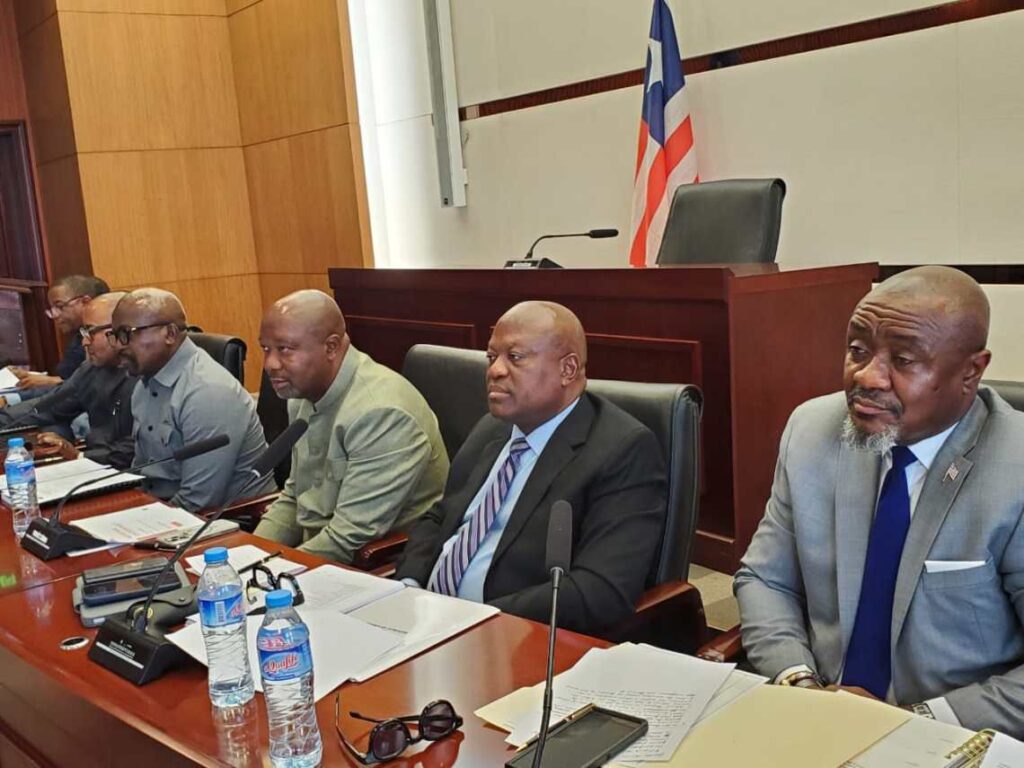
Appearing before the Senate’s Joint Committee on Public Works, Concessions, Investment, Ways, Means, Finance and Budget on Tuesday, Public Works Minister Roland Lafayette Giddings described the proposed agreement as a model for sustainable road development through a blend of private-sector efficiency and public-sector accountability.
“This PPP represents a strategic shift toward sustainable road asset management,” Giddings said. “It brings together private-sector financing and government oversight to ensure durable, all-weather roads.”
According to Giddings, the project will enhance trade and mobility by connecting the Freeport of Monrovia to the borders of Sierra Leone and Guinea. It will target three strategic corridors:
St. Paul Bridge–Klay–Bo Waterside: Strengthening trade and customs operations with Sierra Leone.
Madina–Robertsport: Supporting tourism and the fisheries sector in Grand Cape Mount County.
Voinjama–Kolahun–Mendikorma: Facilitating agriculture and cross-border commerce with Guinea.
The construction includes a 38-kilometer dual carriageway (tolled) from St. Paul Bridge to Klay and 217 kilometers of single carriageways that will not be tolled. The project will follow AASHTO, ECOWAS, and FIDIC standards, featuring drainage systems, lighting, signage, rest areas, and traffic management technologies.
Giddings said the design ensures a 25-year lifespan, with scheduled resurfacing at years 10 and 20.
Under the Design-Finance-Build-Operate-Maintain (DFBOM) model, Pavifort will finance 60 percent of the total cost (US$218.3 million), while the government will contribute 40 percent (US$145.6 million) through the National Road Fund and a US$100 million payment bond.
Toll revenues collected between 2027 and 2050 are projected at US$323.3 million, with about US$23 million set aside for resurfacing works.
“The corridor becomes self-sustaining through toll income, which will finance maintenance, operation, and debt servicing,” Giddings explained.
The Ministry of Public Works disclosed that Pavifort AL Associates has delivered over US$500 million worth of road construction projects in Sierra Leone, Guinea, and The Gambia.
Deputy Justice Minister Charles Karmoh told the committee that the agreement had undergone full legal vetting and meets Liberia’s concession laws. Likewise, PPCC Executive Director Bodger Scott Johnson confirmed that the deal complies with the Public Procurement and Concessions Act.
Acting Finance Minister Anthony G. Myers said the proposal aligns with Liberia’s debt sustainability framework.
“This project will eventually pay for itself,” Myers assured senators.
The Senate’s Joint Committee is currently reviewing the agreement and is expected to present its report to the plenary for ratification. Once approved, the project is anticipated to generate thousands of local jobs, strengthen economic connectivity across ECOWAS, and significantly expand Liberia’s primary road network.
About the Author