By: Melvin Flomo
WhatsApp: 0778677647
Bomi Highway, Liberia — A major foreign investment dispute in Liberia has erupted into a storm of corruption allegations, as a Chinese businessman, Mr. Yang Dan, accuses a top government official and senior police officers of bribery, collusion, and abuse of power in what he describes as an illegal takeover of his multi-million-dollar factory.
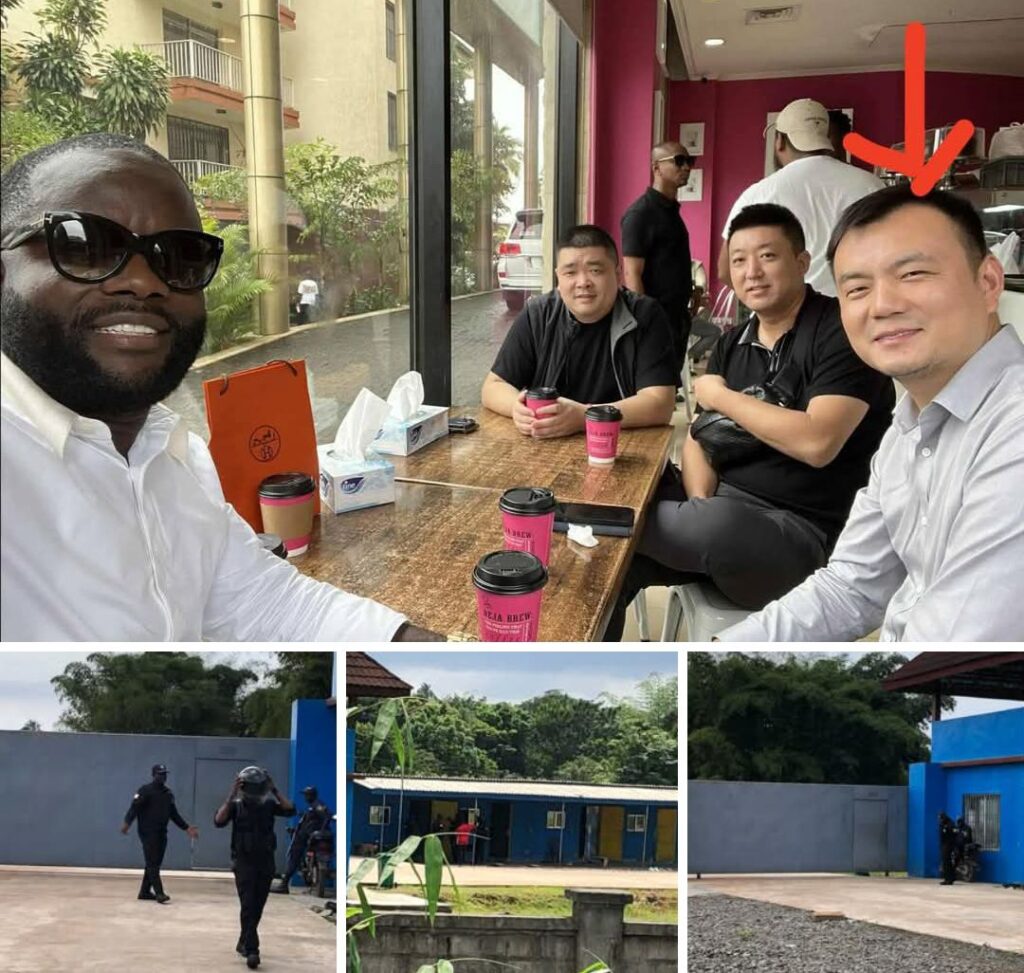
Chinese investor Yang Dan, owner of a US$2.5 million water production company situated along the Bomi Highway, has accused National Port Authority (NPA) Managing Director Sakou Dukuly of orchestrating an unlawful seizure of his property, allegedly with the support of officials within the Liberia National Police (LNP).
Yang, who has lived in Liberia for several years, says his business—once seen as a symbol of renewed confidence in the Liberian economy—has now been reduced to ruins because of what he calls “organized corruption and state-backed intimidation.”
Midnight Eviction Without Court Order
Recounting the alleged incident in an exclusive interview, Yang said armed police officers, acting on Mr. Dukuly’s orders, stormed his factory compound late at night and forcibly evicted him and his workers without any court order.
“How could the police clear him of wrongdoing when they were the same people who carried out the illegal eviction?” Yang asked in frustration. “Even if he claims ownership, there is a legal process. You don’t remove people from their property in the middle of the night without a court order. That’s not law enforcement, it’s criminal behavior.”
Yang described the incident as “terrifying,” alleging that the police beat his security guards, forced workers out of the compound, and seized control of the premises. He believes the nighttime operation was deliberate, meant to conceal the illegality of the act and avoid public or media attention.
‘The Police Have Been Bought’
Yang claims that despite submitting all relevant ownership documents, the police have refused to recognize his rights and have instead taken sides with Mr. Dukuly.
“The police are now guarding the factory for him,” Yang said. “They’ve refused to let me in, even though I legally own 70 percent of the company’s shares. This is not law enforcement, it’s a clear case of corruption.”
He accused senior police officers of receiving bribes to alter reports and suppress evidence that favored him, adding that the investigation into the matter has been “manipulated from the top.”
“The police are no longer neutral, they’ve made themselves part of the crime,” Yang said angrily. “Their report cannot be trusted.”
Investment Turned Nightmare
When Yang first set up his water manufacturing company, it was celebrated as a boost to Liberia’s struggling post-war economy creating jobs for dozens of Liberians and contributing to industrial growth.
Today, the once-thriving facility lies in limbo, its gates locked and guarded by police officers who now answer to his rival. “I came to Liberia to invest, to build, and to help,” Yang said. “But now I’m treated like a criminal. If this is how investors are handled, who will ever invest here again?”
Yang estimates that his total investment covering land, construction, and equipment exceeds US$2.5 million. Since his eviction, he says he has lost access to the facility and all production has ceased.
Police Silent Amid Public Concern
Repeated attempts to obtain a response from the Liberia National Police proved unsuccessful. However, a senior police source who requested anonymity admitted that the case is “politically sensitive” but denied knowledge of any bribery or misconduct.
Despite these denials, the incident has sparked widespread concern about the integrity of the police and the rule of law in Liberia.
Legal Experts Condemn Alleged Eviction
A legal analyst familiar with investment law described the situation as “a textbook example of systemic corruption undermining property rights.”
“No police officer has the authority to carry out an eviction without a court order,” the analyst said. “If this happened as alleged, it’s a gross violation of due process and could lead to criminal charges.”
The expert warned that such cases seriously damage Liberia’s investment reputation. “Foreign investors need to know their assets are safe under the law. When law enforcement becomes an instrument of private interest, it sends a dangerous signal.”
Appeal for Government Intervention
Yang has called on President Joseph Boakai, the Ministry of Justice, and the Liberia Anti-Corruption Commission (LACC) to launch an independent investigation into what he calls a conspiracy involving bribery and police corruption.
“I still believe there are honest people in this government who believe in justice,” he said. “This is not just about me—it’s about the credibility of Liberia. If powerful people can bribe the police and take what isn’t theirs, no investor is safe.”
Yang fears that continued interference from police officers allegedly loyal to Mr. Dukuly could jeopardize his ongoing legal battle for ownership.
Broader Implications for Liberia-China Relations
The case comes at a time when Liberia continues to deepen economic ties with China—one of its major post-war partners in infrastructure and trade. Analysts warn that incidents like this could discourage future Chinese investment.
“When a Chinese investor is humiliated and denied justice, it sends a chilling message,” one economic commentator noted. “Investors want stability, fairness, and protection, not intimidation.”
Recent reports from the Liberia Chamber of Commerce also indicate a decline in investor confidence due to corruption, weak contract enforcement, and the politicization of law enforcement agencies.
As the sun set along the quiet Bomi Highway, Yang Dan vowed to continue his fight for justice. “I will not give up,” he said firmly. “I’ve invested too much in this country to walk away. All I ask is for the law to be respected not bribery, not power, not corruption.”
For now, however, his factory remains under police control, an emblem of the fragile state of justice in Liberia, where the battle between power and principle continues to define the fate of investors.
About the Author